

We all know that creating new, healthy routines in life can be super empowering and great for our wellbeing. But turning those routines into habits? That can be a bit tricky at first. Let’s dive into how you can make this process smoother and more enjoyable!
First things first, let’s clear up a common mix-up. The words “habit” and “routine” often get used interchangeably, but they’re different. Habits are those automatic behaviors you do without even thinking, like being on autopilot. You don’t actively think about your habits – you often just do them, and they feel natural and effortless. Routines, on the other hand, involve a series of actions carried out in a particular way and require more deliberate effort.
Examples of habits? Waking up and showering at the same time every morning or reading the paper over breakfast. Evening habits might include clearing the dinner table, locking the doors, and pouring a glass of water for your bedside before retiring each night.
Examples of routines? Calling Mom Tuesday and Thursday mornings, weekly date nights, brushing your dog’s coat or teeth every other day, or working out, playing an instrument, or reading for an hour before bed several times each week.
Establishing consistent habits involves intentional, frequent, often daily behaviors. Yet, these new practices can feel awkward at first, making them susceptible to abandonment. This is why habit trackers have grown in popularity; they provide a way to support the conversion of routines into true habits by keeping them top of mind.
Increase your success rate of creating new habits by stacking or layering one habit onto another. Here’s a simple process to help you out, with an example where the desired habit is to go for a walk every day.
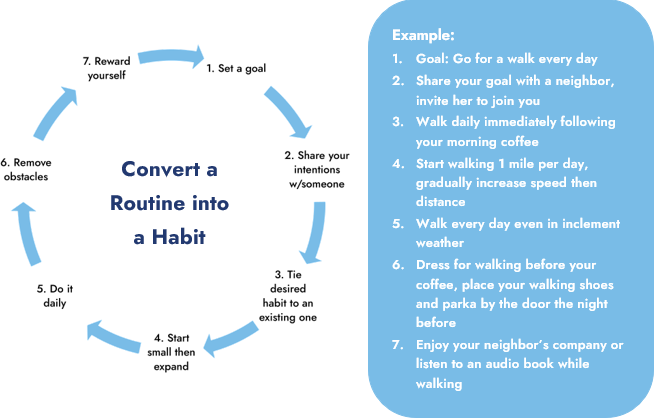
- Set a goal. This speaks to your commitment.
- Share your goal. Telling someone strengthens your commitment because now you’ve got an accountability buddy of sorts.
- Link habits. Connecting a new habit to an existing one increases your chances of success.
- Achieve small goals/targets. Small wins pave the way for bigger ones.
- Perform daily rituals. Repetition strengthens muscle memory.
- Remove obstacles. Minimize the chances of anything getting in the way.
- Reward yourself. Positive reinforcement is key.
Have you ever tried to convert a routine into a habit? What worked or didn’t work for you? Inquiring minds would love to learn from you!
Happy healthy habit-making!
Carol Bergeron guides people through major life transitions with a focus on self-reflection, visualization, and collaboration. She helps clients adapt to personal and professional changes, especially when shaping modern retirement lifestyles, which involve emotional, social, lifestyle, and health-related shifts converging all at once.
Learn more about navigating life’s transitions; explore upcoming small group coaching programs: https://www.eventbrite.com/o/bergeron-associates-13715940172#collections
© Copyright 2025 Bergeron Associates. All rights reserved.